

IndividuoAntisocial
New member
Who was Matthew Shepard?

Matthew Shepard
Matthew Wayne Shepard was born on December 1, 1976, in Casper, Wyoming, to Judy Peck and Dennis Shepard. He spent his early life in Casper, where he attended elementary school, junior high, and high school. While attending school, Shepard became known for his interest in environmental issues and was appointed as the young adult representative to the governor's initiative on statewide recycling.
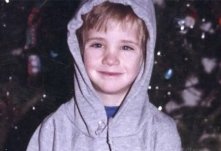
Matthew Shepard as a kid
During his junior year of high school, Shepard left Casper to attend The American School in Switzerland (TASIS). At that time, his mother Judy and younger brother Logan joined Dennis Shepard in Saudi Arabia, where Dennis was employed by Saudi Aramco. While attending TASIS, Shepard was gang-raped by unknown assailants during a school trip to Morocco. Although the crime was reported, the perpetrators were never apprehended. Shepard with emotional and physical trauma. His mother later said that, at the time of his death, he was only beginning to put his life back together after the assault.

Matthew Shepard
After graduating from TASIS, Shepard briefly attended Catawba College in Salisbury, North Carolina. After leaving Catawba, he moved to Raleigh, North Carolina, before returning to Casper, where he enrolled at Casper College, the local community college. He later briefly moved to Denver, Colorado, before deciding to attend the University of Wyoming in Laramie, his parents' alma mater. Shepard was admitted for the 1998–1999 school year, where he studied political science and dreamed of working as a diplomat for the United States Department of State.
Who was Aaron McKinney?
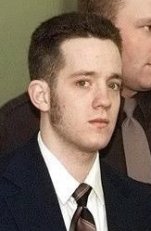 Aaron McKinney
Aaron James McKinney was born in 1976 and was 22 years old at the time of the murder of Matthew Shepard. He grew up in Laramie, Wyoming, in what acquaintances and later reports described as an unstable family environment. His parents divorced while he was young, and he alternated between living with each of them. For periods of his childhood he also lived with his grandparents. According to testimony presented during his trial, his mother died when he was sixteen years old, and by the age of seventeen he was largely living on his own. McKinney attended Laramie High School but never graduated. At fourteen, he spent approximately three months in a juvenile detention center after stealing a cash register from a sports card store. As an adult, he worked primarily as a roofer and other temporary labor jobs. Friends and acquaintances described him as quick-tempered and prone to getting into trouble. Before the murder, he had already accumulated a minor criminal record that included theft and robbery-related offenses.
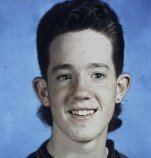 Aaron as a teenager
At the time of the attack, McKinney lived with his girlfriend, Kristen Price, and the couple had a young daughter. After the murder, she was charged with interfering in the investigation for helping conceal evidence, although the original charge was later reduced.
Who was Russell Henderson?
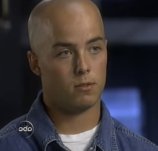 Russell Henderson
Russell Arthur Henderson was born in 1977, Henderson was generally described during his childhood as quiet, polite, and reserved. He was raised largely by his grandparents and, during his early teenage years, was considered a good student. He earned a place on the honor roll, participated in the Future Farmers of America, and completed the requirements to become an Eagle Scout, even appearing in a photograph with the Governor of Wyoming after finishing his Eagle Scout community service project. As he grew older, however, Henderson left high school before graduating and began working as a roofer. Friends later described him as someone who tended to follow others rather than take the lead. By his early twenties he had accumulated a relatively minor criminal record that included arrests related to fighting and driving under the influence of alcohol.
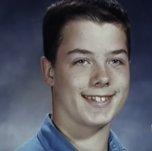 Russell as a teenager
At the time of the murder of Matthew Shepard, Henderson was 21 years old and in a relationship with Chastity Pasley. Following the attack, both Henderson and McKinney attempted to persuade their girlfriends to provide false alibis and help dispose of evidence. Pasley later pleaded guilty to being an accessory after the fact and served a prison sentence.
The murder
On the evening of Tuesday, October 6, 1998, 21 year-old Matthew Shepard walked alone into the Fireside Lounge, a dive bar in Laramie, Wyoming at around 10:30 p.m. wearing jeans and a sport coat. Fireside Lounge was known as a bar where many gay people would met and socialize but it was also casual.

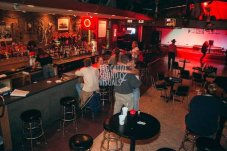
Fireside Lounge bar
There he drank alcohol and spoke briefly to the bartender. At around 11:45 p.m. Aaron McKinney and Russell Henderson both 21 years old entered the bar. They apparently went to the bar to just drink casually and talk, thought others speculate that they went with the intention of robbing any gay person they encountered. They first went to the pool table area but later approached the bartender, sat, bought a pitch of cheap beer and began talking to shepard. The bartender described them as rough-looking and with a kind of rude behavior unlike shepard who was polite and quiet.
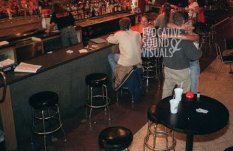
the bar where the three men sat
After briefly talking with him they both went into the bar’s bathroom to discuss and plan how to pretend they were gay in order to gain Shepard's confidence so they could lead him into McKinney's pickup truck and rob his belongings. They saw shepard as an easy target because he was 5-foot-2-inch and weighted only 105 pounds, appearing to be much younger than 21 years old. McKinney and Henderson approached Shepard again and spent time with him inside the bar, eventually offering him a ride home, which shepard accepted.
Shorty after midnight, the three young men climbed into the front seat of McKinney's pickup truck, a 1986 Ford pickup, with Henderson driving and Shepard squeezed into the middle. When they left the bar, McKinney said: "Guess what? We're not gay, and we're going to jack you up." So instead of taking him home, they drove approximately a mile outside Laramie, down a dirt path that ended in a remote, rocky prairie covered with sagebrush and range grass near Sand Creek Road. Once they reached the location, McKinney pulled out a Smith & Wesson .357 Magnum revolver and pistol-wipped him. The two men robbed Shepard, taking his wallet which contained twenty dollars and some credit cards. After that, they took him out of the vehicle and dragged him to a wooden split-rail fence where Henderson used a clothesline to tie Shepard to the fence while McKinney began repeatedly striking him with the butt of the revolver in the face and head. Shepard begged him to stop and said he had another $150 at home he would hand over, bur they ignored him. Shepard was struck in the head and face between 19 to 21 times with the butt of the revolver. McKinney was paranoic because he thought that if he left Shepard alive he would remember the plate numbers, so he ordered Shepard to read back the plate number and, after he did, delivered the fatal blows swinging the gun like a baseball bat. It is said that those final blows were so strong that it had crushed his brain stem. After the beating, McKinney and Henderson stole Shepard's patent leather shoes before leaving him tied to the fence, unable to free himself and gravely injured in the open praire. The official weather station at Laramie Regional Airport recorded a high temperature of 9.4°C and a low of -1.7°C that day. Shepard remained tied to the fence for approximately 18 hours in the near freezing temperatures after the attack making him suffer a severe hypothermia.
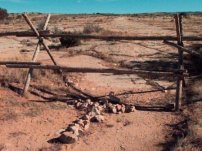
The wooden split-rail where Shepard was left
How McKinney and Henderson were caught
After leaving Matthew Shepard for dead, McKinney and Henderson drove toward the address listed on Shepard's driver's license. According to investigators, they hoped to find additional money or other valuables at his residence. However, they mistakenly confused South 7th Street with North 7th Street and ended up in the wrong part of Laramie. While there, they encountered two local teenagers who were vandalizing a car, and an argument quickly escalated into a physical fight. During the altercation, McKinney struck one of the teenagers with his revolver, causing a serious head wound that later required 21 staples, while the other teenager retaliated by hitting McKinney with a baseball bat, leaving him with a minor head injury. Moments later, a police cruiser driven by Officer Flint Waters arrived after reports of the disturbance. Believing that the occupants of the pickup truck were involved in the vandalism, the officer approached the scene. Rather than speaking with police, McKinney and Henderson abandoned the truck and fled on foot. Henderson was apprehended within minutes, while McKinney escaped and was arrested the following day after his girlfriend took him to a hospital to receive treatment for his head wound. When Officer Waters searched the abandoned pickup truck, he immediately noticed a blood-covered .357 Magnum revolver lying on the passenger-side floor. A further search uncovered several of Matthew Shepard's personal belongings, including his credit cards, but at that time, police had not yet located Shepard.
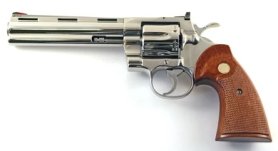
How the .357 Magnum revolver probably looked like (the specific model wasn’t mentioned)
What happened earlier that day
Matthew Shepard’s evening did not begin with the bar. Earlier that day he had plans to go out with his friend Walt Boulden, but around 6:30 p.m. he called Walt and canceled, saying he needed to study for his French class. Later that night, he attended the weekly meeting of the University of Wyoming’s LGBT association. At that meeting the group discussed preparations for the Gay Awareness Week, which was scheduled for the following week. When he got there he’d apparently already been drinking for several hours. He’d been seen at a bar called The Library, and a fellow LGBTA member told the police she could smell alcohol on his breath. After the meeting, several members of the association along with Shepard went to the Village Inn restaurant. Shepard ate cherry pie there. According to the article, he tried to convince the other members to go with him to the Fireside Lounge bar, but nobody wanted to go. Eventually, Kim Nash, another member of the association, drove him home. She watched until he entered his house, believing he was going to stay there for the night.
The discovery of Matthew Shepard
The following evening, cyclist Aaron Kreifels was riding through the area when he noticed what he initially believed was a scarecrow or a discarded Halloween decoration lying near the fence. As he got closer, he realized it was a person. He inmmediatly called the ambulence and emergency responders arrived, Shepard was still alive but in a coma. Reggie Fluty, the first police officer at the scene, later recalled finding him lying on his back with his arms bound behind him. His breathing was shallow and infrequent, and because of his small stature she initially believed he was much younger than twenty-one years old. Fluty attempted to clear Shepard's airway, but his mouth was clamped shut. The medical gloves issued by the Albany County Sheriff's Office were defective, and after her supply ran out she chose to use her bare hands to clear blood from his mouth in an effort to help him breathe. It was described that his face was so covered in blood that the only visible skin was where the tracks of his tears had left a path that night. Sheriff O'Malley who was present at the moment said: "The only time I've ever seen those dramatic of injuries were in high-speed traffic crashes, you know, where there was just extremely violent compression fractures to the skull."

Another angle of the fence
Matthew Shepard’s death
Shepard was first transported to Ivinson Memorial Hospital in Laramie 21 hours after the attack. Once doctors recognized the severity of his injuries, he was transferred to the trauma ward at Poudre Valley Hospital in Fort Collins, Colorado. By the time he arrived, doctors determined that Shepard had suffered fractures to the back of his head and in front of his right ear, along with 4 skull fractures caused by the repeated blows from the .357 Magnum revolver. He had also sustained severe brainstem damage, affecting his body's ability to regulate his heart rate, body temperature, and other vital functions. In addition to the fractures, there were approximately a dozen lacerations across his head, face, and neck. The injuries were so extensive that doctors concluded they were too severe to operate on. Shepard never regained consciousness and remained on full life support. The following day, it was also discovered that Shepard was HIV-positive and that, because the officer that treated him had cuts on her hands, she might have been exposed to the virus. She underwent an AZT treatment regimen for several months before ultimately testing negative for HIV. Judy Shepard later wrote that she herself learned of her son's HIV status while he was lying unconscious in the hospital.
Shepard’s parents, Judy and Dennis Shepard were living in Saudi Arabia, where Dennis was working as an oil rig inspector for Saudi Aramco, but upon discovered what happened they went back to Colorado. When arriving at the hospital, Judy later recalled that she recognized her son only because of his dental braces. She also described that his son’s face was completely covered in bandages and stitches, his fingers and toes were curled in a comatose position and his face was swollen, “kind of unrecognizable till you got closer.”
Matthew Shepard never regained consciousnesses and died of his injuries at 12:53 a.m. on October 12, 1998 at the age of 21 years old.
 Matthew Shepard
McKinney’s trial
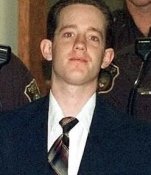 McKinney in court
Aaron McKinney’s case went to trial in October and November 1999. Unlike Henderson, McKinney did not accept a plea agreement and faced a jury. The prosecution argued that the crime was a planned robbery that targeted Shepard and that McKinney was responsible for the attack. McKinney’s defense acknowledged his involvement but argued that the murder was not premeditated. His lawyers attempted to portray the attack as a robbery that escalated unexpectedly. They also introduced the controversial “gay panic” defense, suggesting that McKinney reacted violently after Shepard looked at him in a weird manner because he was forced to perform oral sex by his neighborhood bully as a 7 year old kid.
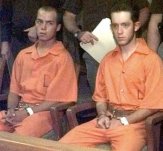
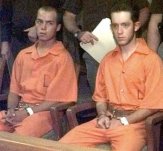
Henderson (left) and McKinney (right) in court
The defense argued that this emotional reaction should be considered when determining his responsibility. The prosecution rejected this argument and stated that McKinney had the ability to make choices and that the evidence showed a deliberate crime rather than an uncontrollable reaction. On November 3, 1999, the jury found Aaron McKinney guilty of first-degree murder, kidnapping, and robbery, he was sentenced to two consecutive life sentences without the possibility of parole, the same sentence received by Henderson.
Henderson’s trial
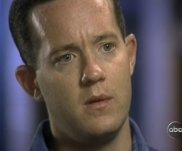
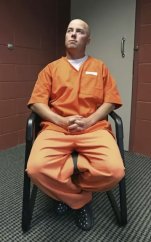 Russell Henderson
Russell Henderson was the first of the two defendants to face trial. In April 1999, he reached a plea agreement with prosecutors and avoided a jury trial. Henderson pleaded guilty to first-degree murder and kidnapping. As part of the agreement, prosecutors agreed not to seek the death penalty against him. He was sentenced to two consecutive life sentences without the possibility of parole. During the proceedings, Henderson admitted his involvement in the crime, but his defense attempted to separate him from the most severe actions and argued that he was not the main aggressor. Prosecutors, however, argued that Henderson participated in the kidnapping and murder and was responsible for his role in the attack.
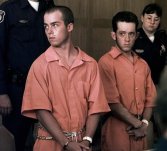
Henderson (left) and McKinney (right) in court
It was also said that they had a problem with drugs: “They [McKinney and Henderson] basically were just kind of two lost kids," The lawyer says: "They were using meth daily, at least weekly for a long period of time.” "People who use meth, chronic meth users, they lose the ability to rationalise, and [have] all kinds of problems mentally."
Despite their lawyers efforts they both were sentenced to two consecutive life sentences without the possibility of parole.
Matthew Shepard
Matthew Wayne Shepard was born on December 1, 1976, in Casper, Wyoming, to Judy Peck and Dennis Shepard. He spent his early life in Casper, where he attended elementary school, junior high, and high school. While attending school, Shepard became known for his interest in environmental issues and was appointed as the young adult representative to the governor's initiative on statewide recycling.
Matthew Shepard as a kid
During his junior year of high school, Shepard left Casper to attend The American School in Switzerland (TASIS). At that time, his mother Judy and younger brother Logan joined Dennis Shepard in Saudi Arabia, where Dennis was employed by Saudi Aramco. While attending TASIS, Shepard was gang-raped by unknown assailants during a school trip to Morocco. Although the crime was reported, the perpetrators were never apprehended. Shepard with emotional and physical trauma. His mother later said that, at the time of his death, he was only beginning to put his life back together after the assault.
Matthew Shepard
After graduating from TASIS, Shepard briefly attended Catawba College in Salisbury, North Carolina. After leaving Catawba, he moved to Raleigh, North Carolina, before returning to Casper, where he enrolled at Casper College, the local community college. He later briefly moved to Denver, Colorado, before deciding to attend the University of Wyoming in Laramie, his parents' alma mater. Shepard was admitted for the 1998–1999 school year, where he studied political science and dreamed of working as a diplomat for the United States Department of State.
Who was Aaron McKinney?
Aaron McKinneyAaron James McKinney was born in 1976 and was 22 years old at the time of the murder of Matthew Shepard. He grew up in Laramie, Wyoming, in what acquaintances and later reports described as an unstable family environment. His parents divorced while he was young, and he alternated between living with each of them. For periods of his childhood he also lived with his grandparents. According to testimony presented during his trial, his mother died when he was sixteen years old, and by the age of seventeen he was largely living on his own. McKinney attended Laramie High School but never graduated. At fourteen, he spent approximately three months in a juvenile detention center after stealing a cash register from a sports card store. As an adult, he worked primarily as a roofer and other temporary labor jobs. Friends and acquaintances described him as quick-tempered and prone to getting into trouble. Before the murder, he had already accumulated a minor criminal record that included theft and robbery-related offenses.
Aaron as a teenagerAt the time of the attack, McKinney lived with his girlfriend, Kristen Price, and the couple had a young daughter. After the murder, she was charged with interfering in the investigation for helping conceal evidence, although the original charge was later reduced.
Who was Russell Henderson?
Russell HendersonRussell Arthur Henderson was born in 1977, Henderson was generally described during his childhood as quiet, polite, and reserved. He was raised largely by his grandparents and, during his early teenage years, was considered a good student. He earned a place on the honor roll, participated in the Future Farmers of America, and completed the requirements to become an Eagle Scout, even appearing in a photograph with the Governor of Wyoming after finishing his Eagle Scout community service project. As he grew older, however, Henderson left high school before graduating and began working as a roofer. Friends later described him as someone who tended to follow others rather than take the lead. By his early twenties he had accumulated a relatively minor criminal record that included arrests related to fighting and driving under the influence of alcohol.
Russell as a teenagerAt the time of the murder of Matthew Shepard, Henderson was 21 years old and in a relationship with Chastity Pasley. Following the attack, both Henderson and McKinney attempted to persuade their girlfriends to provide false alibis and help dispose of evidence. Pasley later pleaded guilty to being an accessory after the fact and served a prison sentence.
The murder
On the evening of Tuesday, October 6, 1998, 21 year-old Matthew Shepard walked alone into the Fireside Lounge, a dive bar in Laramie, Wyoming at around 10:30 p.m. wearing jeans and a sport coat. Fireside Lounge was known as a bar where many gay people would met and socialize but it was also casual.
Fireside Lounge bar
There he drank alcohol and spoke briefly to the bartender. At around 11:45 p.m. Aaron McKinney and Russell Henderson both 21 years old entered the bar. They apparently went to the bar to just drink casually and talk, thought others speculate that they went with the intention of robbing any gay person they encountered. They first went to the pool table area but later approached the bartender, sat, bought a pitch of cheap beer and began talking to shepard. The bartender described them as rough-looking and with a kind of rude behavior unlike shepard who was polite and quiet.
the bar where the three men sat
After briefly talking with him they both went into the bar’s bathroom to discuss and plan how to pretend they were gay in order to gain Shepard's confidence so they could lead him into McKinney's pickup truck and rob his belongings. They saw shepard as an easy target because he was 5-foot-2-inch and weighted only 105 pounds, appearing to be much younger than 21 years old. McKinney and Henderson approached Shepard again and spent time with him inside the bar, eventually offering him a ride home, which shepard accepted.
Shorty after midnight, the three young men climbed into the front seat of McKinney's pickup truck, a 1986 Ford pickup, with Henderson driving and Shepard squeezed into the middle. When they left the bar, McKinney said: "Guess what? We're not gay, and we're going to jack you up." So instead of taking him home, they drove approximately a mile outside Laramie, down a dirt path that ended in a remote, rocky prairie covered with sagebrush and range grass near Sand Creek Road. Once they reached the location, McKinney pulled out a Smith & Wesson .357 Magnum revolver and pistol-wipped him. The two men robbed Shepard, taking his wallet which contained twenty dollars and some credit cards. After that, they took him out of the vehicle and dragged him to a wooden split-rail fence where Henderson used a clothesline to tie Shepard to the fence while McKinney began repeatedly striking him with the butt of the revolver in the face and head. Shepard begged him to stop and said he had another $150 at home he would hand over, bur they ignored him. Shepard was struck in the head and face between 19 to 21 times with the butt of the revolver. McKinney was paranoic because he thought that if he left Shepard alive he would remember the plate numbers, so he ordered Shepard to read back the plate number and, after he did, delivered the fatal blows swinging the gun like a baseball bat. It is said that those final blows were so strong that it had crushed his brain stem. After the beating, McKinney and Henderson stole Shepard's patent leather shoes before leaving him tied to the fence, unable to free himself and gravely injured in the open praire. The official weather station at Laramie Regional Airport recorded a high temperature of 9.4°C and a low of -1.7°C that day. Shepard remained tied to the fence for approximately 18 hours in the near freezing temperatures after the attack making him suffer a severe hypothermia.
The wooden split-rail where Shepard was left
How McKinney and Henderson were caught
After leaving Matthew Shepard for dead, McKinney and Henderson drove toward the address listed on Shepard's driver's license. According to investigators, they hoped to find additional money or other valuables at his residence. However, they mistakenly confused South 7th Street with North 7th Street and ended up in the wrong part of Laramie. While there, they encountered two local teenagers who were vandalizing a car, and an argument quickly escalated into a physical fight. During the altercation, McKinney struck one of the teenagers with his revolver, causing a serious head wound that later required 21 staples, while the other teenager retaliated by hitting McKinney with a baseball bat, leaving him with a minor head injury. Moments later, a police cruiser driven by Officer Flint Waters arrived after reports of the disturbance. Believing that the occupants of the pickup truck were involved in the vandalism, the officer approached the scene. Rather than speaking with police, McKinney and Henderson abandoned the truck and fled on foot. Henderson was apprehended within minutes, while McKinney escaped and was arrested the following day after his girlfriend took him to a hospital to receive treatment for his head wound. When Officer Waters searched the abandoned pickup truck, he immediately noticed a blood-covered .357 Magnum revolver lying on the passenger-side floor. A further search uncovered several of Matthew Shepard's personal belongings, including his credit cards, but at that time, police had not yet located Shepard.
How the .357 Magnum revolver probably looked like (the specific model wasn’t mentioned)
What happened earlier that day
Matthew Shepard’s evening did not begin with the bar. Earlier that day he had plans to go out with his friend Walt Boulden, but around 6:30 p.m. he called Walt and canceled, saying he needed to study for his French class. Later that night, he attended the weekly meeting of the University of Wyoming’s LGBT association. At that meeting the group discussed preparations for the Gay Awareness Week, which was scheduled for the following week. When he got there he’d apparently already been drinking for several hours. He’d been seen at a bar called The Library, and a fellow LGBTA member told the police she could smell alcohol on his breath. After the meeting, several members of the association along with Shepard went to the Village Inn restaurant. Shepard ate cherry pie there. According to the article, he tried to convince the other members to go with him to the Fireside Lounge bar, but nobody wanted to go. Eventually, Kim Nash, another member of the association, drove him home. She watched until he entered his house, believing he was going to stay there for the night.
The discovery of Matthew Shepard
The following evening, cyclist Aaron Kreifels was riding through the area when he noticed what he initially believed was a scarecrow or a discarded Halloween decoration lying near the fence. As he got closer, he realized it was a person. He inmmediatly called the ambulence and emergency responders arrived, Shepard was still alive but in a coma. Reggie Fluty, the first police officer at the scene, later recalled finding him lying on his back with his arms bound behind him. His breathing was shallow and infrequent, and because of his small stature she initially believed he was much younger than twenty-one years old. Fluty attempted to clear Shepard's airway, but his mouth was clamped shut. The medical gloves issued by the Albany County Sheriff's Office were defective, and after her supply ran out she chose to use her bare hands to clear blood from his mouth in an effort to help him breathe. It was described that his face was so covered in blood that the only visible skin was where the tracks of his tears had left a path that night. Sheriff O'Malley who was present at the moment said: "The only time I've ever seen those dramatic of injuries were in high-speed traffic crashes, you know, where there was just extremely violent compression fractures to the skull."
Another angle of the fence
Matthew Shepard’s death
Shepard was first transported to Ivinson Memorial Hospital in Laramie 21 hours after the attack. Once doctors recognized the severity of his injuries, he was transferred to the trauma ward at Poudre Valley Hospital in Fort Collins, Colorado. By the time he arrived, doctors determined that Shepard had suffered fractures to the back of his head and in front of his right ear, along with 4 skull fractures caused by the repeated blows from the .357 Magnum revolver. He had also sustained severe brainstem damage, affecting his body's ability to regulate his heart rate, body temperature, and other vital functions. In addition to the fractures, there were approximately a dozen lacerations across his head, face, and neck. The injuries were so extensive that doctors concluded they were too severe to operate on. Shepard never regained consciousness and remained on full life support. The following day, it was also discovered that Shepard was HIV-positive and that, because the officer that treated him had cuts on her hands, she might have been exposed to the virus. She underwent an AZT treatment regimen for several months before ultimately testing negative for HIV. Judy Shepard later wrote that she herself learned of her son's HIV status while he was lying unconscious in the hospital.
Shepard’s parents, Judy and Dennis Shepard were living in Saudi Arabia, where Dennis was working as an oil rig inspector for Saudi Aramco, but upon discovered what happened they went back to Colorado. When arriving at the hospital, Judy later recalled that she recognized her son only because of his dental braces. She also described that his son’s face was completely covered in bandages and stitches, his fingers and toes were curled in a comatose position and his face was swollen, “kind of unrecognizable till you got closer.”
Matthew Shepard never regained consciousnesses and died of his injuries at 12:53 a.m. on October 12, 1998 at the age of 21 years old.
Matthew ShepardMcKinney’s trial
McKinney in courtAaron McKinney’s case went to trial in October and November 1999. Unlike Henderson, McKinney did not accept a plea agreement and faced a jury. The prosecution argued that the crime was a planned robbery that targeted Shepard and that McKinney was responsible for the attack. McKinney’s defense acknowledged his involvement but argued that the murder was not premeditated. His lawyers attempted to portray the attack as a robbery that escalated unexpectedly. They also introduced the controversial “gay panic” defense, suggesting that McKinney reacted violently after Shepard looked at him in a weird manner because he was forced to perform oral sex by his neighborhood bully as a 7 year old kid.
Henderson (left) and McKinney (right) in court
The defense argued that this emotional reaction should be considered when determining his responsibility. The prosecution rejected this argument and stated that McKinney had the ability to make choices and that the evidence showed a deliberate crime rather than an uncontrollable reaction. On November 3, 1999, the jury found Aaron McKinney guilty of first-degree murder, kidnapping, and robbery, he was sentenced to two consecutive life sentences without the possibility of parole, the same sentence received by Henderson.
Henderson’s trial
Russell HendersonRussell Henderson was the first of the two defendants to face trial. In April 1999, he reached a plea agreement with prosecutors and avoided a jury trial. Henderson pleaded guilty to first-degree murder and kidnapping. As part of the agreement, prosecutors agreed not to seek the death penalty against him. He was sentenced to two consecutive life sentences without the possibility of parole. During the proceedings, Henderson admitted his involvement in the crime, but his defense attempted to separate him from the most severe actions and argued that he was not the main aggressor. Prosecutors, however, argued that Henderson participated in the kidnapping and murder and was responsible for his role in the attack.
Henderson (left) and McKinney (right) in court
It was also said that they had a problem with drugs: “They [McKinney and Henderson] basically were just kind of two lost kids," The lawyer says: "They were using meth daily, at least weekly for a long period of time.” "People who use meth, chronic meth users, they lose the ability to rationalise, and [have] all kinds of problems mentally."
Despite their lawyers efforts they both were sentenced to two consecutive life sentences without the possibility of parole.
Attachments

Last edited: